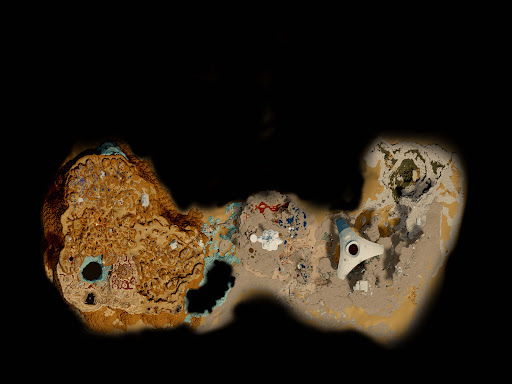
Angel Comb Guide

Normal Fauna
Passive
Bloom
・Shallows
・Blighted Coral
・Observatory
・Power Plant
Angel Comb Behavior
Angel Comb Databank Entry
This animal (Cecidia gamikos) has no Earthly analog and no clear ecological niche. The ancestral form may be a ctenophore (comb jelly). Of all animals on Earth, comb jellies are the least related to humans.
[1] Active central bulb
The central bulb is similar to an enormous cell nucleus. It contains gene sequences from organisms in the surrounding environment.
[2] Viral loop
The combs release a large RNA virus into the seawater. This virus (designated Proteavirus) infects all other organisms in the ecosystem. Infected organisms produce new copies of the virus, which return to the angel comb carrying stolen genes from infected hosts. The angel comb conducts genetic piracy on a massive scale.
[3] External food source
The angel comb draws food from the titan rockbore below. Angel combs may be obligate parasites of titan rockbores.
Assessment: Touch central bulb for genetic adaptation. Further investigation urgently required.
**Note: users may be curious about the symbiosis between Earthly parasitic wasps and polydnaviruses. The wasp's own genome contains the viral genome, allowing the wasp to create the virus for use in its reproductive cycle.
Angel Comb Survival Tips
Interacting with these can often lead to a change in your DNA and an adaptation that makes you better suited to the water.